
New Alliances with the Ecosystems
Art, Science and Environment at the Time of the Climatic and Pandemic Crisis
Elena Posokhova
4/8/20206 min read
Andrea Conte, in art Andreco, is a visual artist with a PhD in Environmental Engineering. His post-doctoral research - a collaboration with the School of Engineering at the University of Bologna and Columbia University in New York City, was focused on Nature Based Solutions and green technologies for sustainable resource management in different climates. His artistic research is focused on the relationship between humans and ecosystems, between the built environment and the landscape. Andreco uses various techniques to present his art, from public installations to photos, videos or wall paintings, performances and drawings. Andreco has worked for several international festivals, museums and galleries.
ANDRECO — @andreco_ — www.andreco.org — www.climateartproject.com
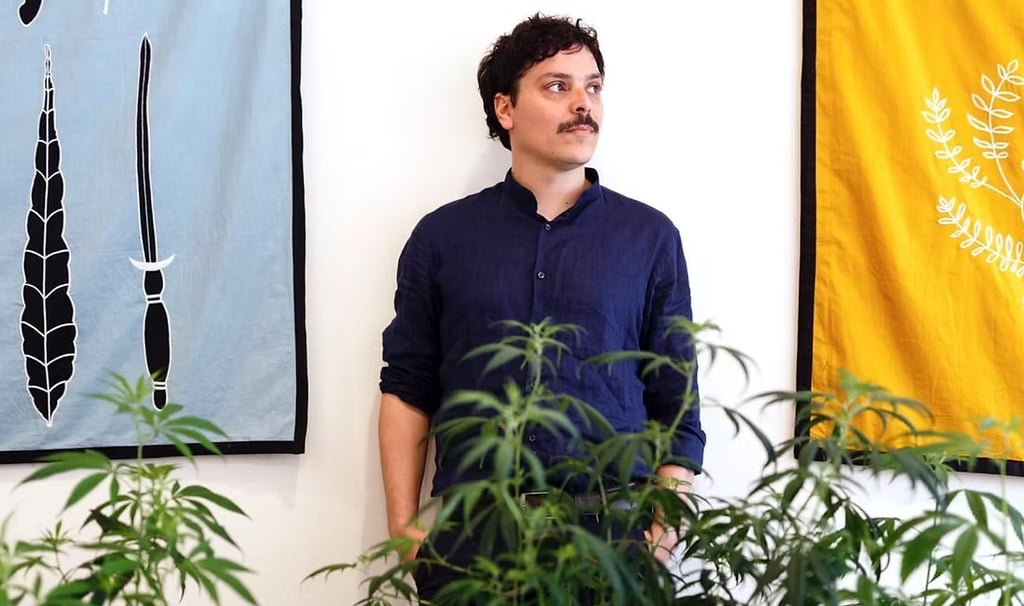
The fundamental idea of all your creativity / research?
We are facing a global environmental and climatic crisis and my artwork is affected and formed by it. My artistic research is multidisciplinary, influenced by science, environment, activism, anthropology, philosophy, social and political science and many other things. Curiosity and complexity are part of my artwork concept. An artwork is different from a communication campaign, or a piece of design, or a decoration: it is more similar to something that is between a magic ritual and a revolutionary act.
All my artworks are tributes to the ecosystem.
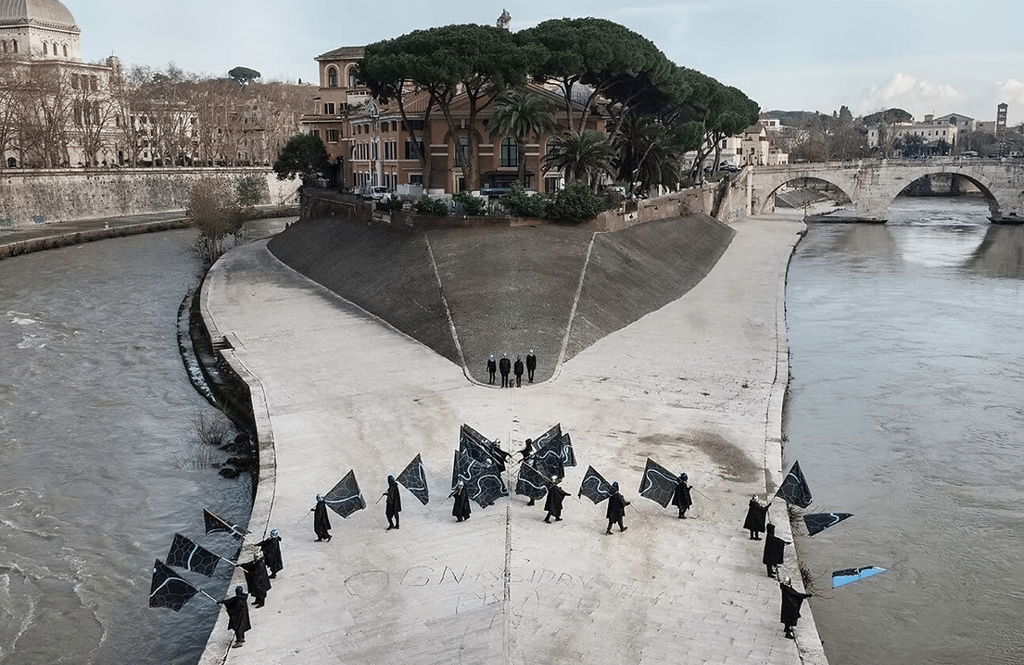
Andreco – Parade for the river Tiber. Produce by: Romaeuropa Foundation with Teatro dell’Opera di Roma, Accademia Nazionale Santa Cecilia for La festa di Roma di Roma Capitale. Rome, 2020
Tell us a bit about your studio and work: where and how you work, any rituals/habits you have to start a creative process/work, what is the most important/favorite/precious thing for you in your studio?
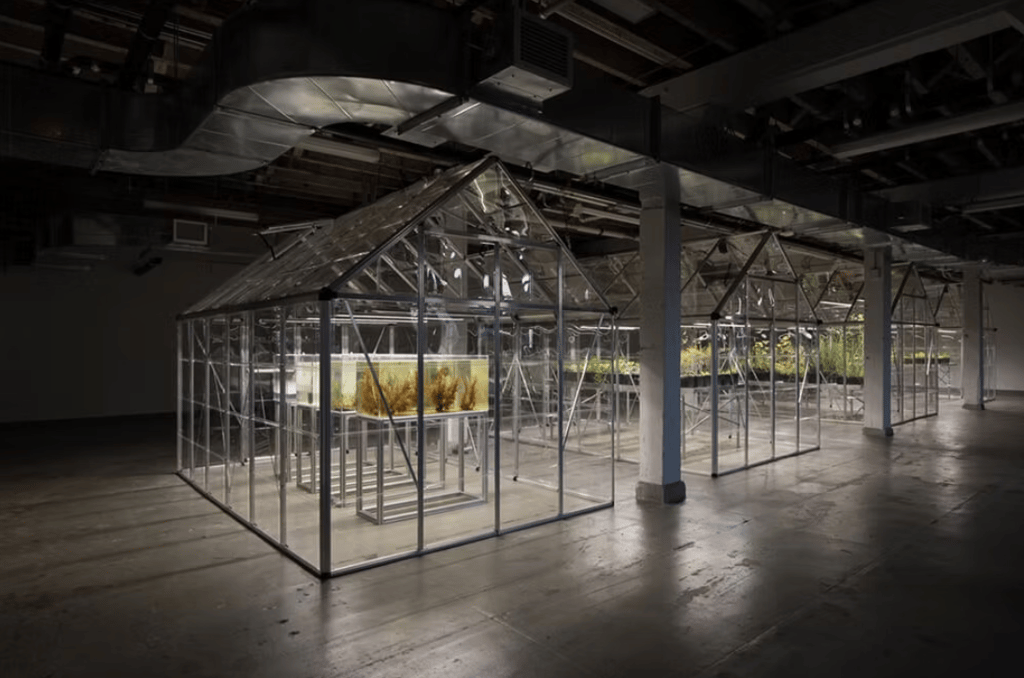
So much of my work engages non-traditional materials and processes—the components of the systems within which I work. Half of my studio space is outdoors: this is where I experiment with many living things, in particular plants. Last year I spent over twelve months growing species of plants known historically from New York City but which are no longer found growing autonomously within the city. After exhibiting these species within a series of greenhouses, they were planted in public gardens in Manhattan – returning the species to the places they once grew wild. But they are now under the perpetual care of gardeners, as they cannot survive on their own without assistance. For these living materials, studio work is not only creative—but an active and ongoing practice of care-giving. The rituals of the gardener are therefore a part of my studio practice.
Extinct in New York, 2019. Installation view. Living organisms, lights, air and water circulation devices, substrate, aluminum, polycarbonate, and acrylic enclosures. Courtesy of the artist.
What is your opinion on the importance of the dialogue between scientists and artists (science and art)? Why is this necessary?
Science underpins a modern conception of the world. Scientific concepts activated through technology have shaped this world. A systems view is fundamentally a scientific and technologically informed point of view. My work is both indebted to and critical of these systems. As contemporary subjects, we are embedded within these structures. But they are often invisible or seen as the exclusive purview of experts. As an artist, I want to make these structures more visible and more felt. Sometimes, events in the external world suddenly bring these systems to the fore. The global spread of COVID-19 has awakened so many more people to the science of epidemiology and the inter-species origin of viral pathogens.
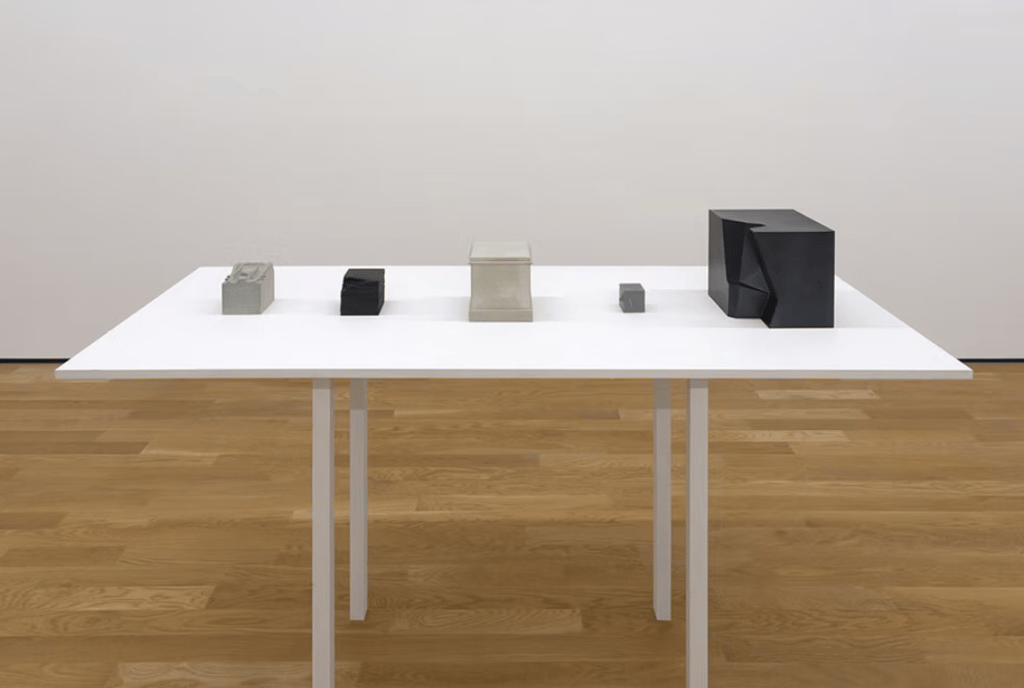
Carbon Copies, 2012-. Installation detail. Mixed media, certificates, carbon offsets. Photo: Mark Woods.
How do you work/would like to work with scientists for your creative process?
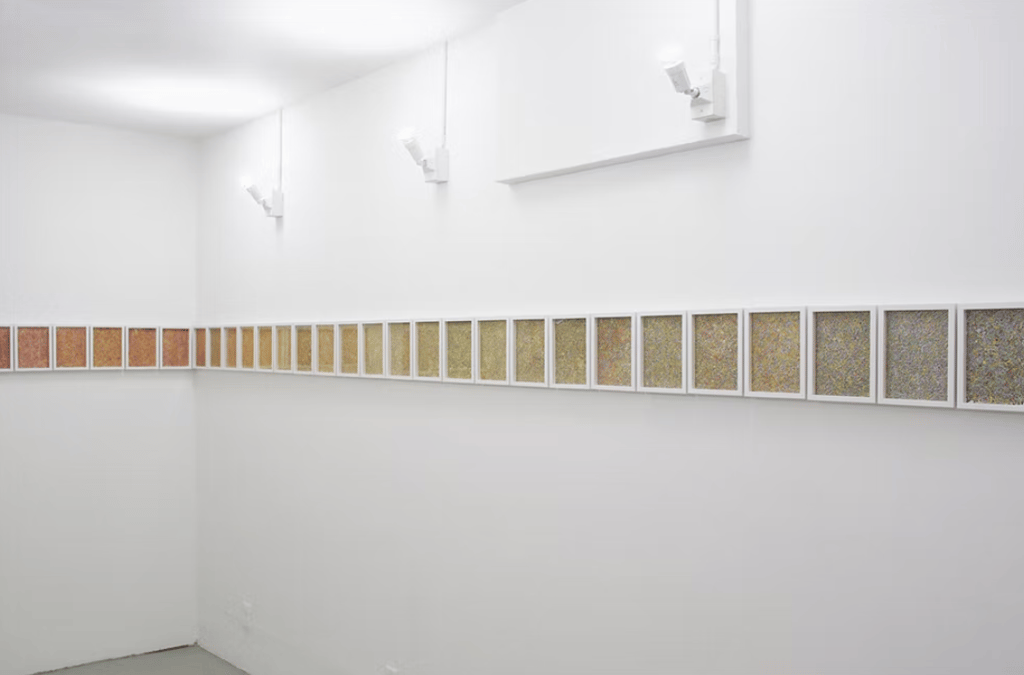
When I begin a new work there is always a steep learning curve—I must immerse myself in a field or fields in which I do not have expertise. Working with, and learning from, scientists has been a very important means to enter into these unfamiliar territories. I have been able to actively collaborate with scientists for some works as well. In the work Differentiation Series, I worked with a stem cell researcher to create micrograph images of artificial stem cells, which I subsequently hand-painted according to a color-mixing system inspired by the differentiation of human cells. When this work is exhibited, the scientist uses these works on paper to describe her research. At the same time, an art historian presents a competing talk from an art historical perspective (often touching on the history of color theory). Art and science discourses merge here, but not always harmoniously.
Differentiation Series, 2012. Installation detail. Inkjet and watercolor on archival paper, performance. 44 elements, 6 x 8 in. (15.24 x 20.32 cm.) each.
Your most intresting/current project? What was the message of the project? What artistic expression did you get?
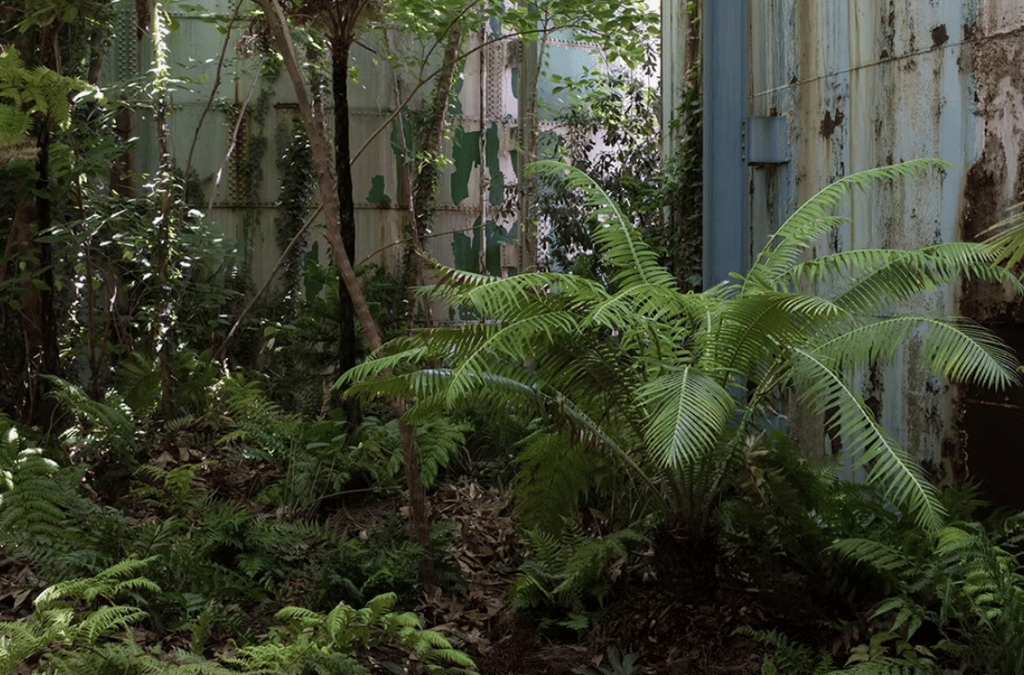
I am involved in a series of projects that continue my interest in the sources of modern energy. I have completed a number of works focused on the relationship between the ancient forests of the Carboniferous Period and the production of coal. I am now looking into the production of shale gas (fracking), nuclear power, and hydroelectric power.
First Forest, 2018. Installation view. Polypodiopsida, Cycadopsida, and Araucariaceae species installed in coal gas plant; irrigation system; stainless steel viewing platform. Installation detail. Courtesy of the artist.
Your very particularly thing for inspiration?
I am often interested in the invisible (or overlooked) origins of everyday things. Where does our electricity come from (powering the laptop I am writing on at this very moment)? Where does the water from the tap come from? What is the wild ancestor of the tomato I am eating as part of my lunch?
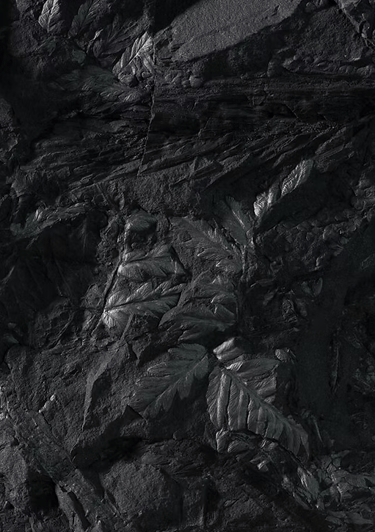
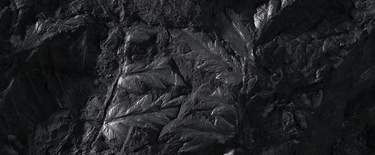
Mariopteris, Upper Silesia, 2018. Digital photograph. Courtesy of the artist.
Are you involved in any exhibition at the moment? How is going? What do u think about virtual visit expo?
Several exhibitions are in limbo right now because of restrictions to control the spread of COVID-19...
Tell us about your memorable experience in art Residence? Where it was?
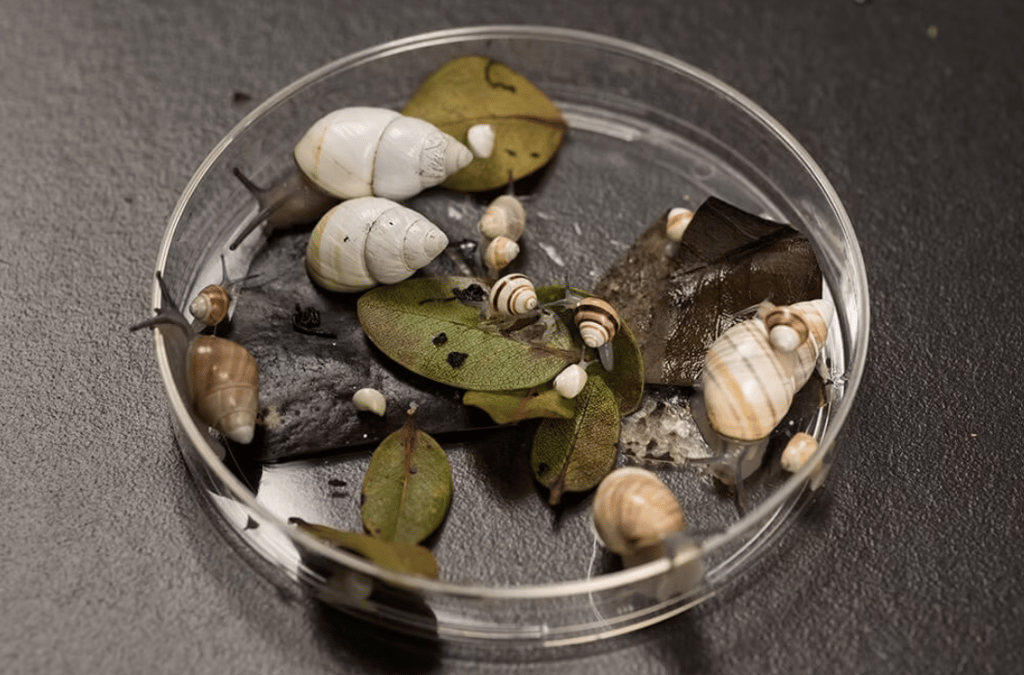
I was very lucky to do a residency in Hawaii (Trades-AiR). This was an important site for my research into species extinct in the wild. Hawaii in an incredible place with many endemic species. While some of these species are now extinct, long-standing conservation work has saved or preserved many of these unique species. I was particularly interested in those species maintained solely in cultivation or captivity, including a number of rare terrestrial snails.
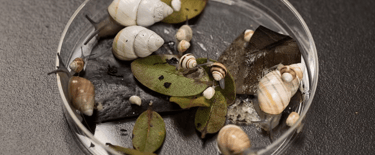
Achatinella fulgens, Hawaiian Tree Snail Conservation Lab, Kailua, Hawaii, United States, 2018. Digital photograph. Courtesy of the artist.
What is your dream project?
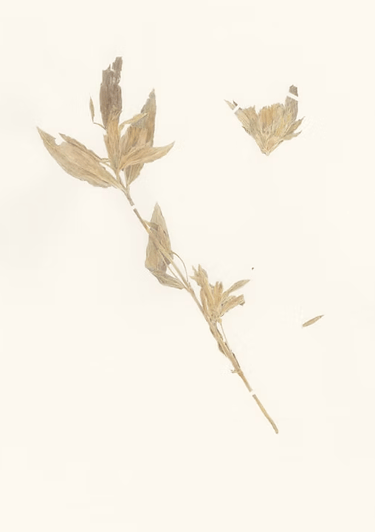
The project “Extinct in New York” (for which I cultivated and re-introduced species that no longer grow wild in New York City) is, I hope, the beginning of a series of works focusing on the lost ecosystems of several modern cities. Some of my early research has uncovered many unique urban natural histories—orchids found only in Hong Kong, or the great diversity of butterflies once found in Singapore, for example. I would like to create permanent installations--public gardens, perhaps—for the cultivation or nurture of these species, returning them to the urban spaces they once called home.
Gentiana andrewsii, Greenbelt, Staten Island, 1974, 2019. Detail. Watercolor and graphite on paper, inkjet print. Courtesy of the artist.